











The Magic of Okanjati Game Reserve
A remarkable story of a true conservationist who made his dream of creating a place of refuge forwildlife in the Namibian wilderness a reality. Not only the wildlife has benefited from Jan Oelofse’s passion; he has also made it possible for visitors from all over the world to share in this remarkable enterprise. Today the Oelofse family proudly continue to preserve this legacy.
|
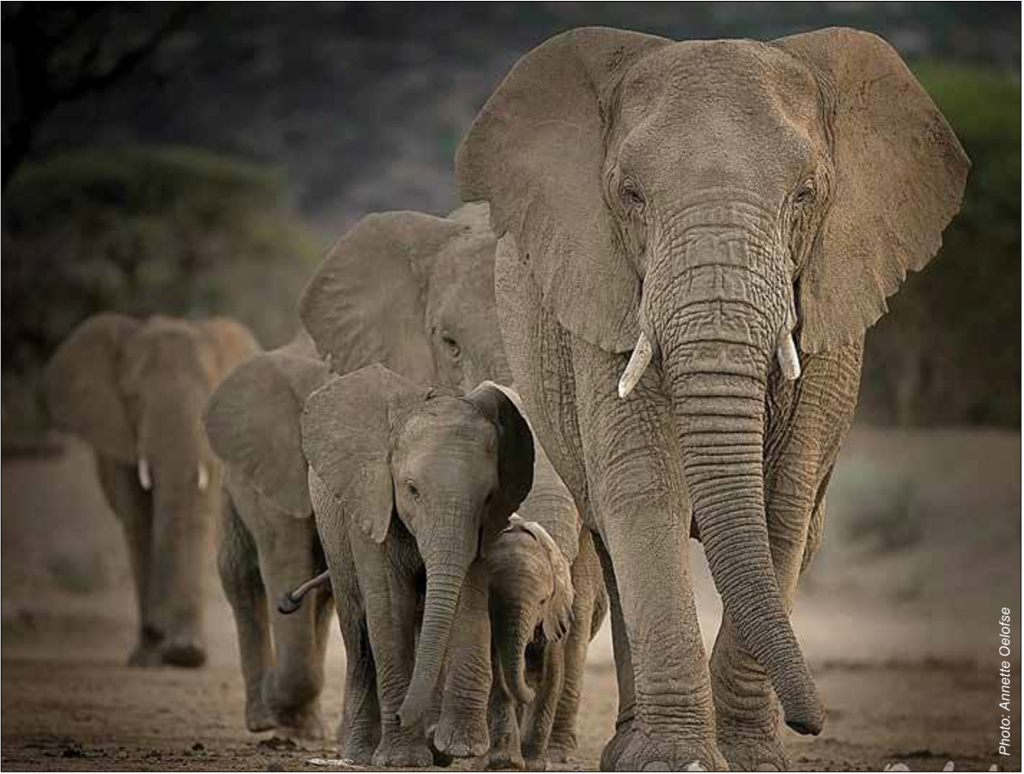
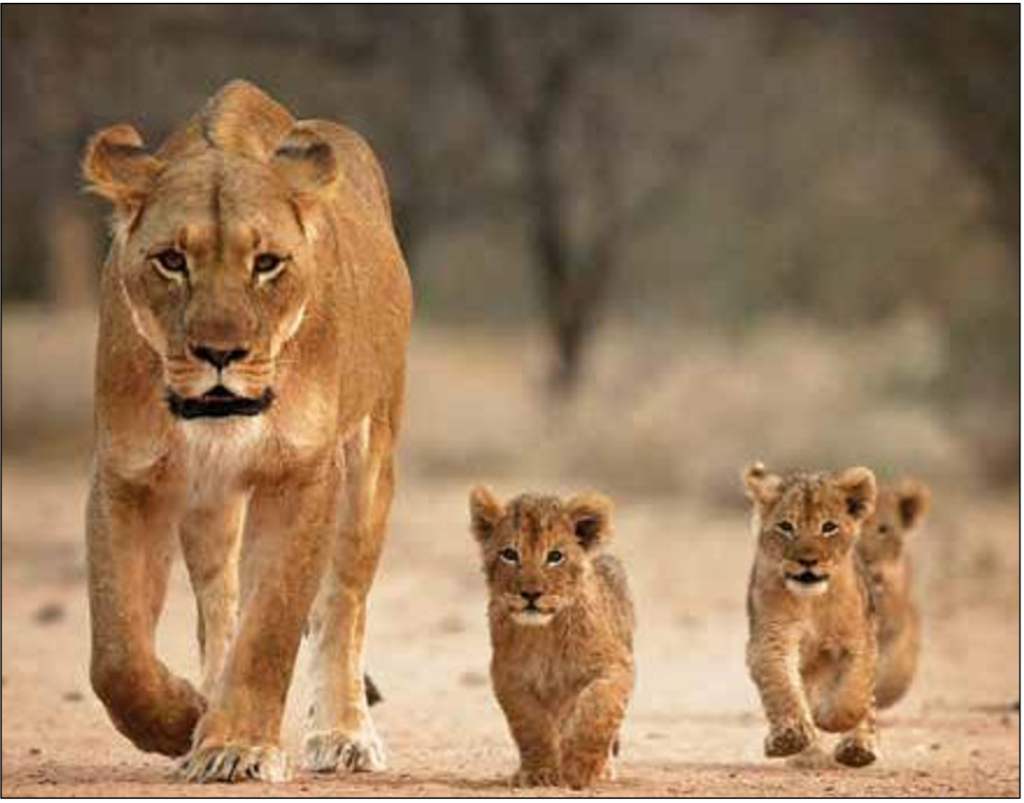
Entering the Okonjati Game Reserve, one is welcomed by a group of unperturbed impala, springbuck and waterbuck, completely at ease with the people gazing at them as they drive past. Up in the trees and skies the healthy environment boasts a colourful variety of birds. In front of the historic Mount Etjo Safari Lodge a family of hippos is lazing at the waterhole. If you are lucky, the elephants will pay the lodge a visit and in the distance you may even hear lions roar.
At Okonjati you will be able to observe black and blue wildebeest, Burchell and Hartmann zebra, about a thousand giraffes(NOT kidding!), the beautiful sable antelope, roan, lechwe, nyala, and even black and white rhinos, with not a single rhino having been poached since thepoaching epidemic started. This is their home.
Human guests from around the world are welcome but this paradise was created for the animals and their environment. Etjo means “place of refuge” and there could not have been a more fitting name for it.
This was the dream of Jan Oelofse: creating a wildlife sanctuary. He was the founder of the Okonjati Game Reserve and Mount Etjo Safari Lodge in 1975. Jan and his wife, Annette, constructed everything needed to sustainably meet the financial aspects of this daring goal. This included establishing one of the first lodges in Namibia, a hunting lodge, a small village, a private school, a vegetable garden and a butchery.
It took decades of hard work, a lifetime’s worth of determination and an abiding love of the Namibian wilderness to build this peaceful haven.
“Always give back more than you take out!” was Jan’s philosophy. You have to take your hat off to Jan and Annette, who in their lifetime achieved so much, and to their son Alexander, who after Jan’s passing in 2012 has continued this legacy.
THE CONSERVATIONIST
The success story of Jan Oelofse, who arrived in Namibia with only a meagre N$700 in his pocket, is founded on his sincere passion for wildlife, the responsible utilisation of his assets, as well as making the most of what was available at the time. He started out capturing, breeding and re-selling game animals, making use of the farm Etjo as his home base. The capture method he applied was his own brainchild and he is still famous for it. The so-called “Oelofse method” allowed not just for a few, but for hundreds of animalsto be caught in an efficient and effective way. Jan was the first to use a helicopter to herd animals into a funnel-like structure consisting of plastic sheets and wiring. This method is still widely in use today and has pretty much revolutionised the game industry, saving the lives of countless animals.
Its development is the ultimate testament to the love Jan Oelofse had for African animals. Since its application, areasdevoid of certain species could be easily restocked, and at the same time animals did not need to be culled just because the carrying capacity of an environment was exceeded. “Capture versus killing” was Jan’s credo, and his book Capture to be Free, written and compiled by Annette, tells of this massive achievement.
The mass capture of wild animals today is indispensable to the four pillars of the game industry: breeding, hunting, ecotourism and product sales. Jan and his family have managed to employ these four important sources of income to perfection, so that they complement one another effectively and sustainably. Mount Etjo Safari Lodge won the WRSA award in the “Green Economy” category in 2017.
THE HUNTING LODGE
The largest income with the least expense is generated through the hunting sector. When Jan Oelofse started offering safaristo overseas clients in the 1970s, he was one of the first in Namibia to do so. However, despite their long-established and good standing in the hunting business, the Oelofse family choose to keep things small and personal, with only around 45 hunting guests having the opportunity to visit the reserve every year.
Four professional hunting guides have been in permanent employment at Jan Oelofse Hunting Safaris for decades. Allfour are men of the wilderness, exceptional characters with many stories to share: Naftali Amwoolongo and Phillipus Elias were the first black PHs in Namibia to obtain their hunting licences, both renowned for their almost supernatural tracking capabilities and endurance. Steve Tors was born in the USA but lost his heart to the Namibian wilderness and has been with Jan Oelofse since the age of 18. Rudie de Klerk never fails to amaze hunting clients with his unsurpassed knowledge of birds and animals. Every year, Rudie takes a disabled hunter, recipient of the SCI pathfinder award, on a free hunt of 10 days, 10 animals. Many bring their children and families not only to hunt but to enjoy the pristine wilderness. The lodge is located at the heart of the reserve, with only sixrooms, a swimming pool and beautiful lapa and bar area, overlooking a water hole. Countless animals can be seen from up here and the elephants often enjoy a drink out of the pool.
To the PHs at Okonjati Game Reserve, hunting is a means towards conservation. “One has to sacrifice a few to save the species,” Jan Oelofse would explain. Only old bulls, which no longer serve a reproductive purpose, are sacrificed. Never are herds to be disturbed byhunting activities; only bulls roaming the bush alone are harvested. Meat hunting is conducted making use ofsilencers, which are custom-built by Alex Oelofse. These are sold under the brand name Calypso and can be purchased atgun shops in Windhoek.
Most importantly, however, the proceeds of hunting arereinvested to the benefit of the animals. “If you act in the interests of the animal, you are making the sustainable and right decision,” Annette says. Hunting remains a controversial topic for many but had it not been for the hunting community and sensible legislation and support from the Namibian government in favour of this profitable industry, Okonjati Game Reserve would not be in existence today.
THE COST OF CONSERVATION
Keeping up with the costs of maintaining a game reserve is no easy task. However, the philosophy of “always giving backmore” definitely applies during dry years, which hit Namibia on an almost regular basis. During the years 2014–2018, up to seven tons of alfalfa per day for six months were strategically distributed to provide sustenance for the starving animals at Okonjati Game Reserve. Obtaining and transporting the feedfrom South Africa and stocking it in a massive barn, hascost millions. But animal lives were saved and that is all that counts.
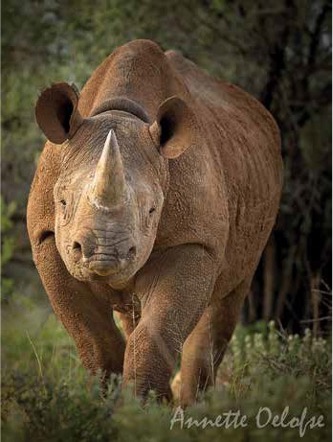
Annette has a particular soft spot for rhinos.
She spends thousands of Namibian dollars on an immeasurable amount of fat-free long-life milk that she uses as her proven recipe to save orphaned white and black rhinos from across the country. A small rhino consumes up to five litres of milk five times daily and needs constant company in the form of either another rhino or a human surrogate mother. The Ministry of Environment and Tourism has entrusted Annette with several black rhinos, and some private white rhino owners have given their calves to her little rhino orphanage. But to her, the milk has “only material value” – the time she spends with her little dependants is of much more significance.
To Annette, learning from rhinos and observing their behaviour is tremendously enriching. Nonetheless, shefeels that wild animals deserve to be part of their species and limits contact to other humans as much as possible. All rhinosare returned to the wild once capable of fending for themselves. Visitors may observe resident rhinos and all the other animals at Okonjati in their natural environment by taking part in the manyactivities offered at Mount Etjo Safari Lodge. The rhino tracking experience, in particular, offers guests an exhilarating opportunity to get up close to these majestic animals on foot, accompanied by an experienced guide.
MOUNT ETJO SAFARI LODGE
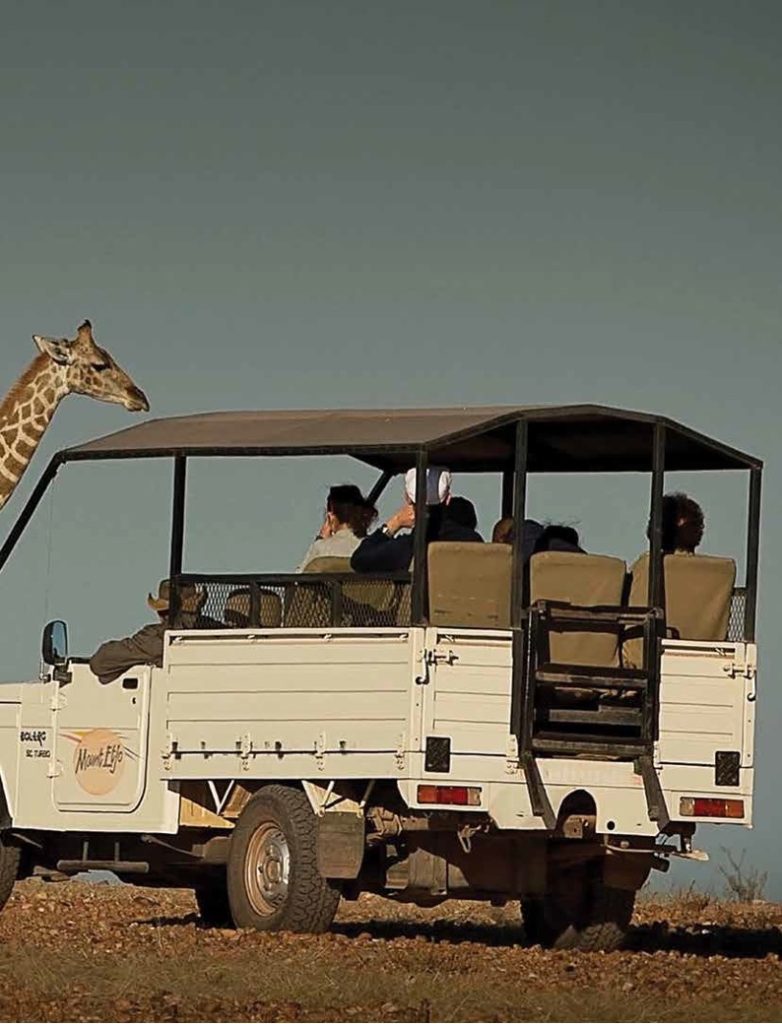
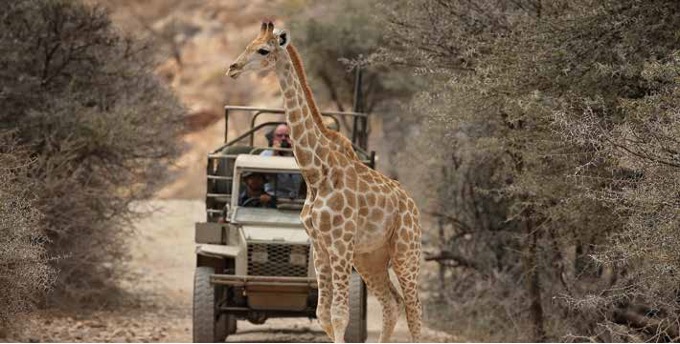
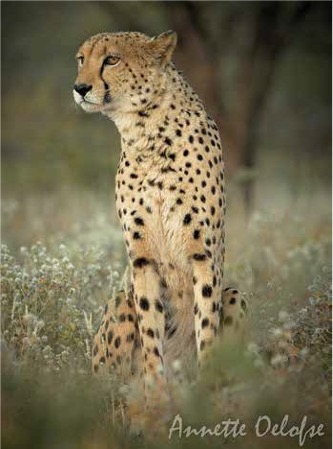
When you see lions only a few metres away, with only a protective concrete wall separating you from these fierce animals, you truly appreciate their immense size and power. The lion feeding experience is raw, ferocious and ruthless but it is a reflection of nature itself. From an open vehicle you can also observe a family of cheetahs feeding – these docile and elegant cats are equally amazing to see. A must-do activity is the three-hour long game drive, either in the morning or afternoon, which takes you across the vast 34000 hectares property to observe almost everything the African wilderness can offer. Three hours will likely not even be enough if you want to spend quality time taking photos and soaking up the tranquil ambience of the bush. Thelodge grounds, too, offer a great opportunity to relax, either at the swimming pool, the lounge or at the water hole.
Visiting the fossilised dinosaur footprints around the cornerof the campsite offers a nice excursion to those wishing to explore the area on foot.
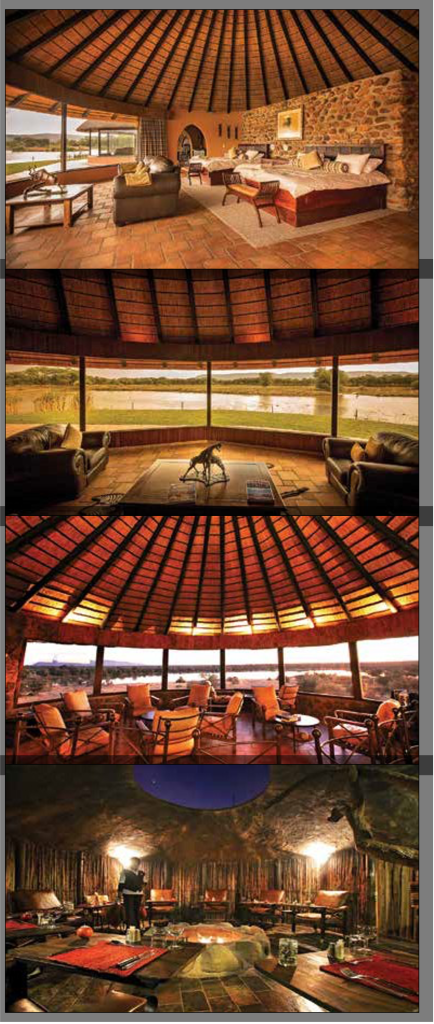
The historic lodge was first built to accom-modate the film crew for the movie The Red Elephants. The firstrooms were completed in a matter of three weeks, making use of whatever was available, including home-made furniture and curtains. No need for architects, plumbers or electricians – Jan and his very capable wife, Annette, did all the work themselves.
After the film crew had left, the fully furnished rooms could be rented out to visitors from all over the world. One of the first lodges in Namibia had sprunginto existence. More staff were employed over the years and the building was frequently refurbished and fine-tuned to meet the requirements of luxury accommodation. It was a great honour to the family and staff to host the signing of the Namibian Independence Declaration on 8 and 9 April 1989, signifying the first step to a forming a proud new nation. The information centre at the lodge outlines this historic moment. The centre also provides more information on everything there is to know about the animals, the plants,trees, shrubs, insects and history of the place.
CATERING FOR HAPPY GUESTS
Guests are more than happy with the service at Mount Etjo Safari Lodge. Indeed, the extensive buffet served at dinnerunder the stars and around an open fire never leaves anyone hungry. For the sweet-toothed visitor, a delicious variety of home-baked cakes and coffee or tea is served in the afternoons in the cool shade of an enormous tree. Some of the greens served at dinner come from the large organically-grown vegetable patch behind the lodge. The game meat is of course sourced from the reserve and greatly enjoyed: free of hormones, antibiotics, rich in iron and completely organic, sourced from happy, free-ranging animals. In fact, the approximately 8 000 tourists visiting the lodge every year consume more meat than 45 hunting clients could ever provide.
Fortunately, a great surplus of animals is generated every year that can meet this additional demand, and more. In order to keep the balance and never exceed the carrying capacity of the land, some meat is sold to nearby towns. A fully functional butchery, boasting a sausage machine, a massive cooling container, a room for “biltong and droëwors” (dried meat and dried sausage), a smoking oven for smoked meat, vacuum-packing machines and some five employees ensure quick and efficient processing of a huge and tasty variety of meat products.
GAME CAPTURE
Where possible, Alex Oelofse still adheres to his father’s belief in “capture as opposed to killing” and he would rather capture and sell live surplus animals to other game farms and parks than selling meat products. Having learnt the procedure from the developer of the technique himself, with an instinctive knowledge of animal behaviour and as a helicopter pilot, Alex is atremendously skilful game capturer. Mostly he coordinates the entire ground team over the radio while herding a group of jumpy animals towards the capture site, always reacting to changes in wind direction and strength while flying – and all this while calmly chewing away on a piece of biltong! During the drought of 2016, Alex caught and sold around 1 400 animals, saving them from starvation and offering them better pastures elsewhere.
EMPLOYEES – A GOOD LIFE
“We have our own little republic,” Jan would proudly say, with the Kalkfeld post office existing only because Jan and Annette bought an additional five post boxes to justify its service. There are, after all, around 90 employees receiving their post at P.O. Box 81, Kalkfeld, and most of them have used this address for a few decades.
The staff at Mount Etjo have grown to become a family during the past 40 years, with some employees having been part of the business since the beginning. Some are third-generation employees, having followed in the footsteps of their parents and grandparents. For some this is a place of refuge, too. Animals come first, but the staff at Mount Etjo have a good life. The littlevillage provides free housing, electricity, water, firewood and meat rations and, most importantly, free education to around 40 children from Grade 1–6. The little school is run by two dedicated teachers and provides meals, stationery, and even a bursary for tertiary education to students who excel academically
FULL CIRCLE
The income generated from breeding, hunting, ecotourism and meat production provides jobs and a comfortable living for the employees and their extended families, sustains all habitat and wildlife and, in return, the wildlife pays for itself. Sustainability has always been key to managing such a large game reserve in Namibia, completely independent of outside funding. The symbiotic relationship between all these facets may seemidealistic but it is absolutely possible. The Okonjati Game Reserve is living proof that hard work, good business sense and above all, a passion for wildlife, can result in a utopian relationship between man and wildlife, where all parties benefit and to the detriment of none. Visitors to the reserve, either as hunters or tourists, have the great opportunity not only to support but to share in this admirable passion. ASM