
The Great Springbuck Trek of 1896: When Millions of Antelope Covered the Karoo
The remarkable true story of one of South Africa’s greatest wildlife migrations — and the disappearance of a natural spectacle that once rivalled anything on Earth.
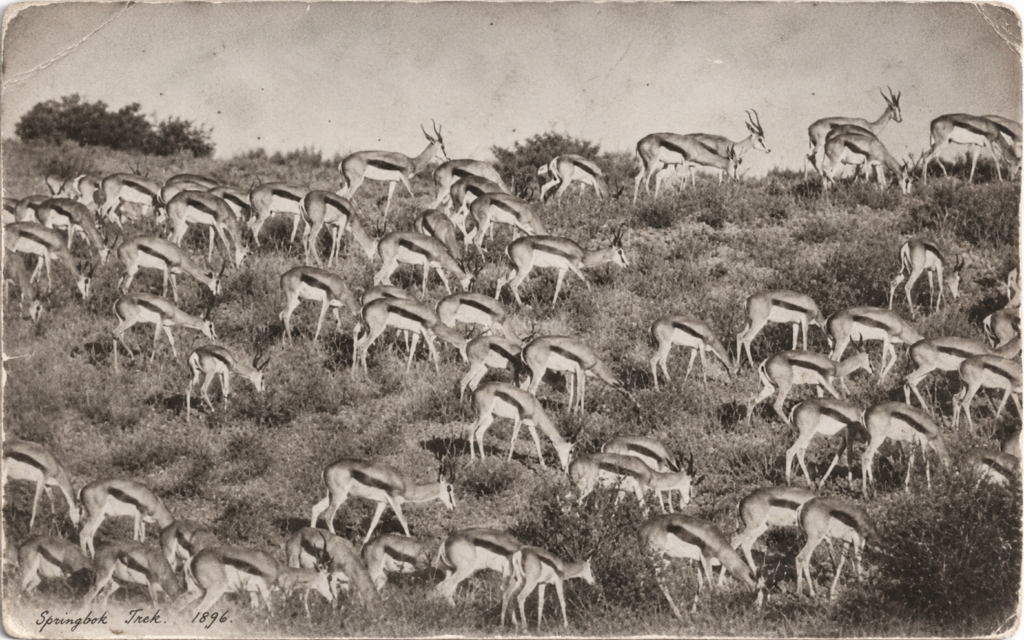
Imagine standing on a lonely stretch of Karoo veld in the winter of 1896. Across the distant horizon, the landscape appears to shimmer and move. As the spectacle draws nearer, an extraordinary sight unfolds: springbok, thousands upon thousands of them, spreading across the plains as far as the eye can see.
This was the Great Springbuck Trek of 1896, one of the last enormous migrations of springbok (Antidorcas marsupialis) recorded in South Africa.
Today, springbok remain familiar inhabitants of the country’s semi-arid regions. But few people realise that these graceful antelope once travelled in such astonishing numbers that they could cover entire landscapes, overwhelm farms and transform the countryside.
A Sea of Springbok
The great springbok migrations, known in Afrikaans as the trekbokke, were an extraordinary feature of nineteenth-century southern Africa. Unlike the annual wildebeest migrations of East Africa, springbok treks were irregular, largely driven by drought and the search for grazing.
During the severe drought of 1895–1896, vast numbers of springbok moved through the northwestern Cape Colony, particularly the districts of Prieska and Hopetown.
One of the most important eyewitnesses was Samuel Cronwright-Schreiner, husband of the celebrated South African author Olive Schreiner. In July 1896, he travelled from Kimberley by train to Kran Kuil, then continued by horse-drawn transport through Strydenburg towards the migrating herds.
Together with two experienced farmers, he estimated that at least 500,000 springbok were visible at one time. He described an immense gathering covering the countryside, with the pale markings of the antelope giving the veld the appearance of a light snowfall.
The entire trek was estimated to extend across an area approximately 222 kilometres long and up to 24 kilometres wide. Although these figures were not established by a modern census, they suggest that the total population involved numbered in the millions.
The Hunters Follow the Herds
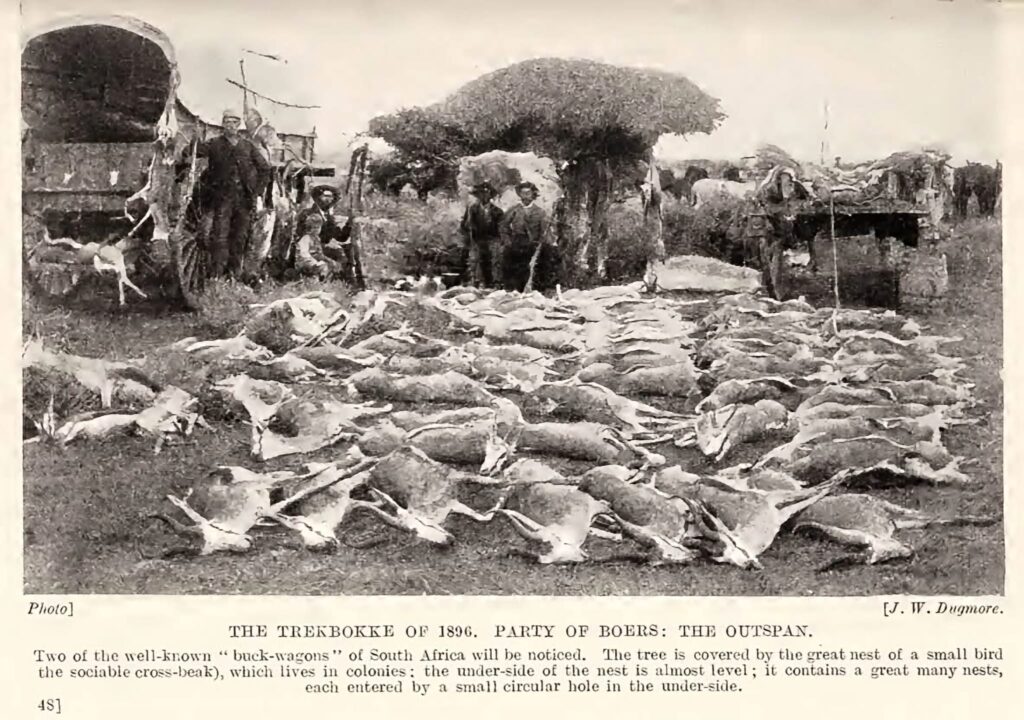
Wherever the springbok travelled, hunters followed. The arrival of enormous herds created opportunities for farmers, professional hunters and traders. Ox-wagons were loaded with provisions, rifles and ammunition, and hunting parties established temporary camps, or outspans, across the veld.
The photograph above captures this aspect of the 1896 migration. Hunters stand among their wagons, surrounded by springbok carcasses. Behind them, a large communal nest built by sociable weavers occupies a tree — a distinctive feature of the arid Northern Cape landscape.
Springbok were hunted for their meat and skins. Much of the meat was dried into biltong, while skins were sold to traders. Cronwright-Schreiner reported that traders at Omdraai’s Vley were purchasing approximately 3,000 springbok skins per week.
He also described wagons transporting hundreds of carcasses towards railway stations, from where the meat was distributed to Kimberley, Johannesburg, Cape Town and other markets.
A Landscape Overwhelmed
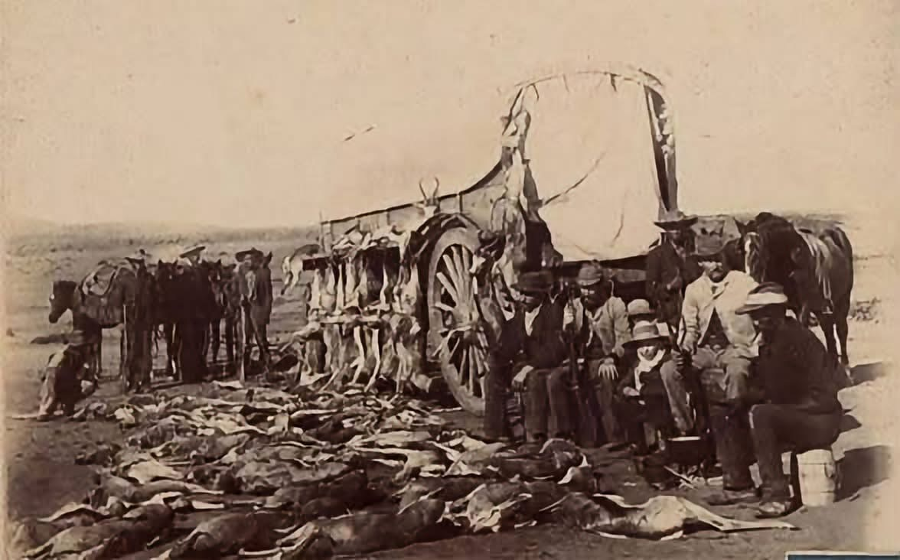
The great trek was not simply a wildlife spectacle. Its effects on the countryside were enormous. Springbok consumed grazing intended for sheep and cattle, damaged cultivated lands and sometimes broke through fences.
Cronwright-Schreiner described farms where grazing had been so severely depleted that livestock had to be moved elsewhere. At Weel Pan, he encountered a farm of approximately 25,000 acres where the vegetation had been eaten down and trampled by the migrating animals.
The migrations also brought suffering to the springbok themselves. Thousands were shot, wounded or separated from their young. Predators followed the herds, while vultures and other scavengers benefited from the abundance of carcasses.
The photographs from this period reveal a difficult truth: the migrations were both magnificent natural events and occasions for hunting on an extraordinary scale.
The Man Who Witnessed History
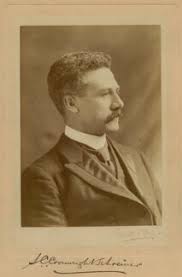
Cronwright-Schreiner understood that he was witnessing something exceptional. In his account published in The Zoologist in 1899, he described how he and his companions put aside their rifles and sat watching the immense gathering.
Their reaction was one of wonder rather than excitement about hunting. He recognised that such a spectacle might never be seen again. His observations remain among the most important historical records of the 1896 migration.
Why Did the Great Treks Disappear?
By the early twentieth century, the enormous springbok migrations had largely vanished. Commercial hunting removed vast numbers of animals. Expanding sheep and cattle farming altered the grazing landscape. Fences, settlements and agricultural development increasingly restricted the movements of wildlife.
Drought and changing environmental conditions added further pressure. Although the rinderpest epidemic of 1896 has sometimes been associated with the decline of the treks, historians have emphasised the combined effects of hunting, agricultural expansion, habitat fragmentation and environmental change.
The springbok survived, but the ecological conditions that had made migrations of millions possible were fundamentally transformed.
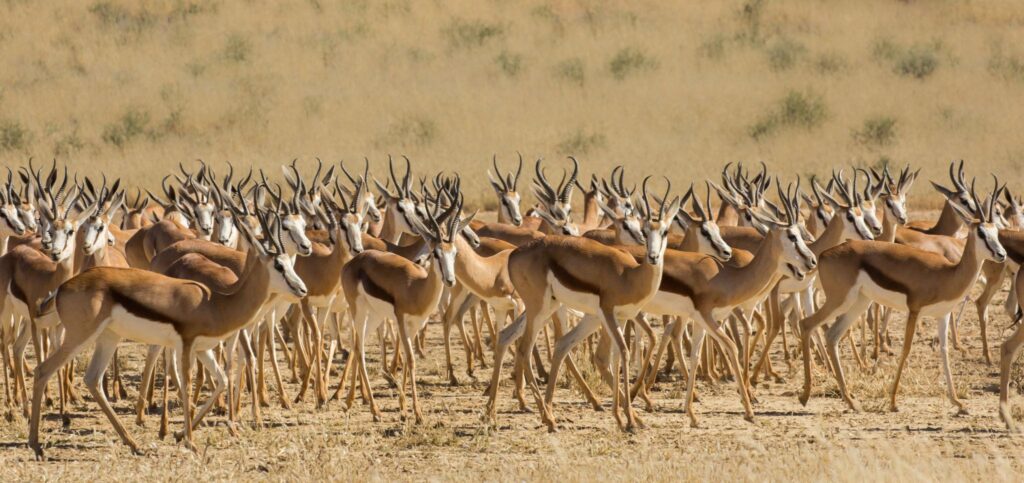
A Lost Wonder of the Karoo
Today, visitors to the Northern Cape can still see springbok grazing on open plains or pronking across the veld. Yet these modern herds offer only a glimpse of the extraordinary abundance witnessed in 1896.
The Great Springbuck Trek belongs to a South Africa that has largely disappeared — a landscape where wildlife could move across enormous distances without the barriers that now divide the countryside.
The surviving photographs are especially important. They capture the people, wagons and hunting activities associated with an event that would otherwise be known mainly through written descriptions.
More than 130 years later, the story of the Great Springbuck Trek remains a powerful reminder of the richness of South Africa’s natural heritage — and how quickly even the greatest wildlife spectacles can vanish.
The springbok still runs across the Karoo, but the days when millions moved together like a living river are gone.